State Secretary Carolina Novac Presented the Republic of Moldova’s Experience in Energy Transition at the IAEA Regional Workshop in Cyprus
- 632 reads


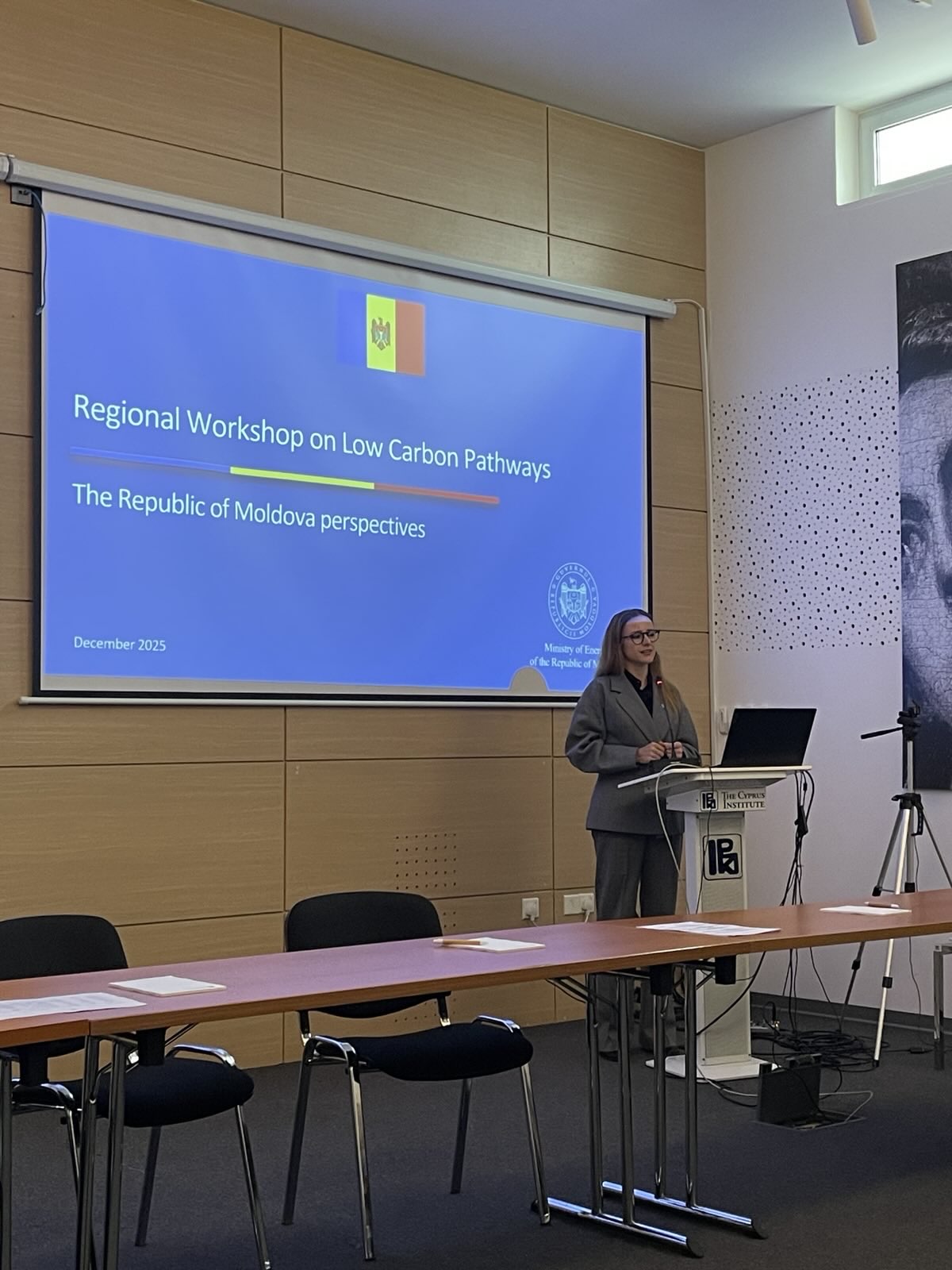
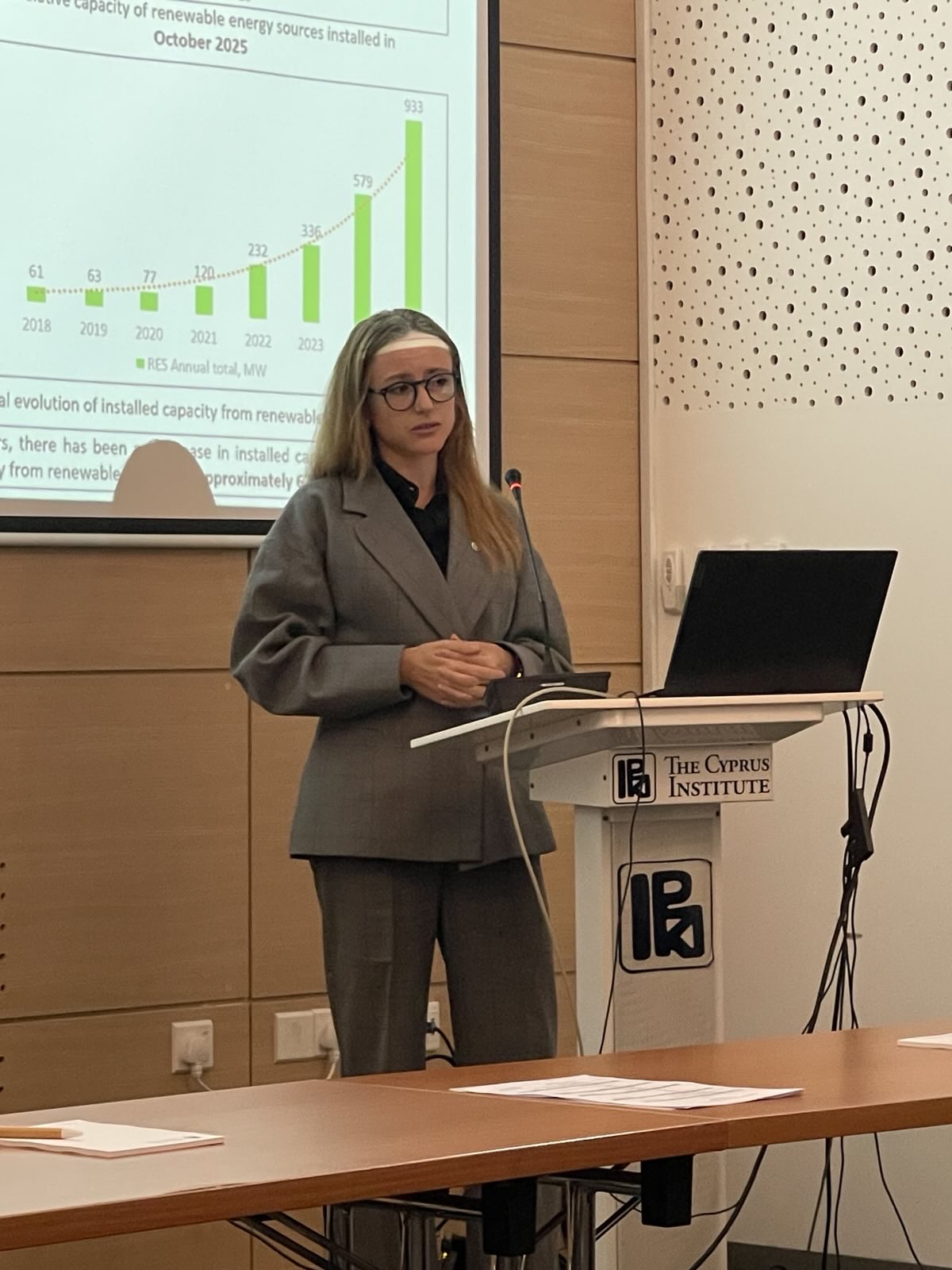
State Secretary of the Ministry of Energy, Carolina Novac, participated last week in a regional workshop organized by the International Atomic Energy Agency (IAEA) on pathways toward low-carbon energy transitions, held in Nicosia and hosted by The Cyprus Institute. During the workshop, the official presented the Republic of Moldova’s perspective on accelerating a credible, well-grounded, and investment-attractive energy transition, with a time horizon up to 2030 and beyond.
The project aimed to support IAEA Member States in achieving the climate stabilization objectives of the Paris Agreement and in preparing their national energy and climate plans and nationally determined contributions.
In her remarks, Carolina Novac highlighted three key lessons from the Republic of Moldova’s experience. The first refers to the shift from purely declarative targets to an implementable planning system, based on strengthening modeling capacities and institutional coordination—a process that culminated in the development of the Integrated National Energy and Climate Plan (INECP) 2025–2030. Emphasis was placed on establishing a permanent mechanism for interinstitutional cooperation, regular technical meetings, and the harmonization of assumptions and criteria for evaluating energy and climate policies.
A second important message concerned the role of data, transparency, and strong institutions as the foundation of effective public policies. The Republic of Moldova has strengthened its national energy data systems through recurring technical validations, clarification of institutional responsibilities, and transparent consultations with stakeholders—essential elements in the context of regional integration and the increasingly complex challenges facing energy systems.
The third message underlined that, while the level of ambition is clearly defined, the real challenge remains the large-scale implementation of the committed measures. The INECP sets clear objectives for 2030 and requires significant long-term investments through 2050, including the mobilization of financing, reduction of import dependence, and continuation of market reforms, while maintaining security of supply.
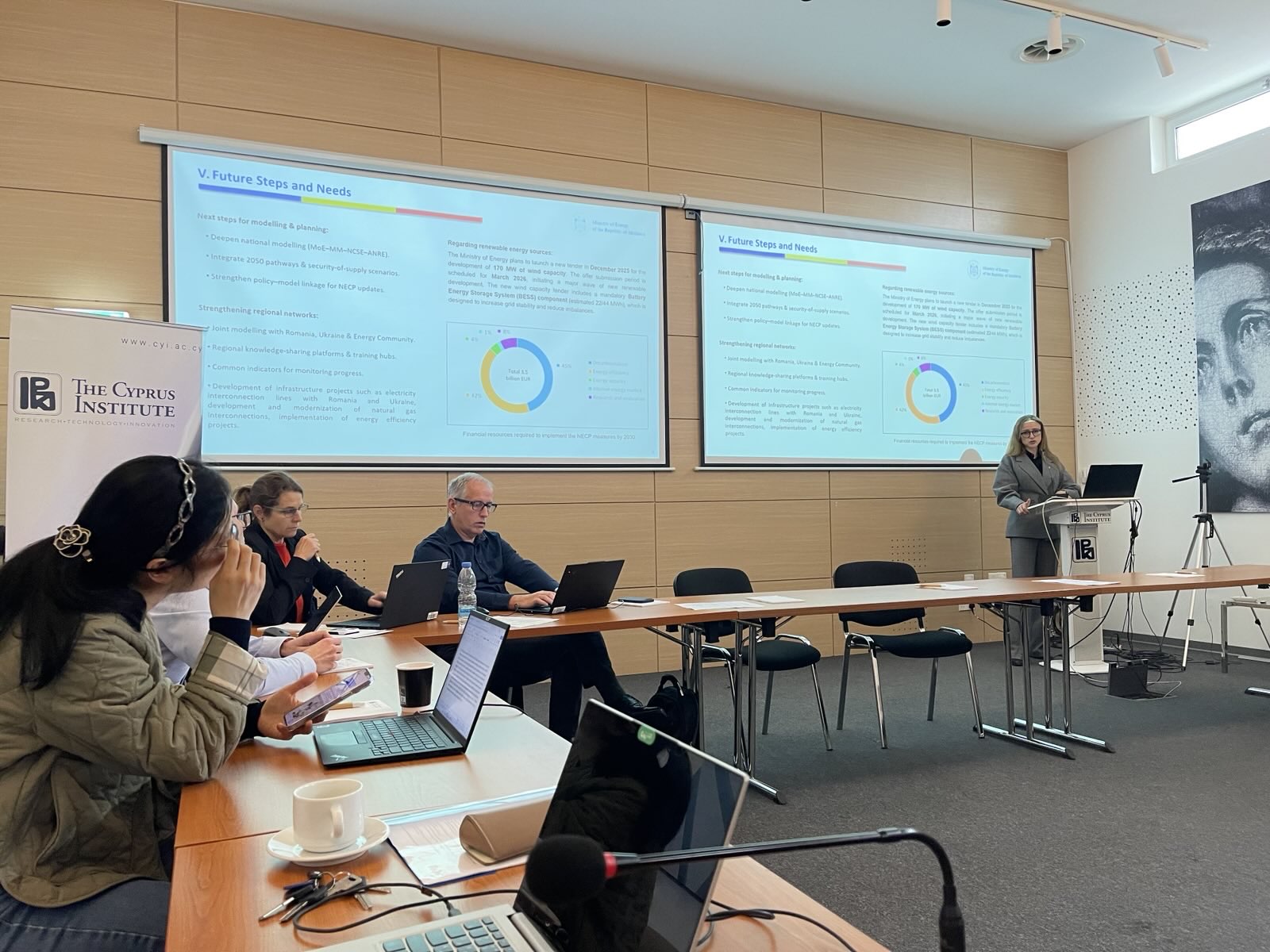
During the discussions, the Republic of Moldova’s next steps were also presented: further strengthening modeling capacities and the link between policies and analysis; integrating scenarios for 2050 and for energy security; enhancing regional cooperation with Romania, Ukraine, and the Energy Community; and continuing the expansion of renewable energy sources and system flexibility. In this context, the organization of a new wind energy tender planned for December 2025 was also mentioned, which will mandatorily include energy storage solutions (BESS).
The discussions also addressed long-term options included in the draft Energy Strategy of the Republic of Moldova up to 2050, including the analysis of the potential of SMR technologies (small modular reactors), in light of international experience regarding regulatory frameworks, financing, supply chains, and public acceptance.
Images