Solid Biofuels: An Alternative to Natural Gas and an Opportunity for the Local Economy
- 404 reads

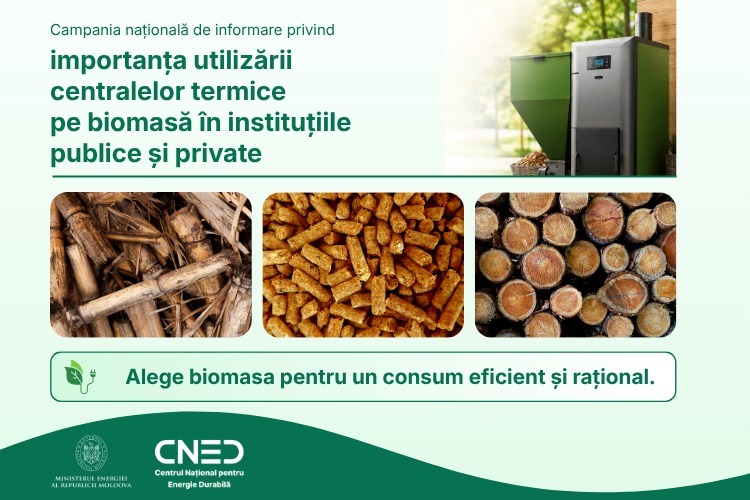
The importance and benefits of using solid biofuels in the public and private sectors are at the heart of a national information campaign conducted by the National Center for Sustainable Energy (NCSE), in partnership with the Ministry of Energy of the Republic of Moldova.
The campaign, running from August 2026 to March 2027, aims to promote the use of renewable energy sources for heating, reduce dependence on natural gas, and increase energy resilience, including by reducing consumers’ exposure to fluctuations in natural gas prices on international markets. The initiative is part of the preparations for the 2026–2027 heating season.
By promoting solid biofuels, NCSE and the Ministry of Energy seek to contribute to diversifying heating energy sources and strengthening the energy security of the Republic of Moldova, while making use of renewable resources and supporting the development of the local economy.
“In recent years, we have learned an important lesson: the cheapest and most secure energy is the energy we can produce and make use of at home. Solid biofuels contribute to reducing natural gas consumption, provide a competitive heating alternative, and support the local economy by developing a value chain that starts in agriculture and ends in the communities that use these resources. Developing the biomass market is part of the Republic of Moldova’s broader effort to strengthen its energy independence and build a more diversified, resilient energy system that is less exposed to external shocks,” said Minister of Energy Dorin Junghietu.
“The current energy context gives us an additional reason to make better use of the resources available in our country and invest in efficient solutions. Moldova has biomass resources, local producers, and infrastructure that has developed in recent years, while government programmes managed by NCSE are already supporting the transition to modern biofuel-based heating systems. Combining energy efficiency with the use of local resources means lower consumption, greater energy security, and more value created in the national economy,” said Ion Muntean, Director of NCSE.
The campaign targets public and private institutions, businesses, and other consumers interested in modern heating solutions based on solid biofuels. As part of the campaign, information seminars and consultation sessions will be organized, while the public will have access to practical guides and materials on the selection, installation, operation, and maintenance of solid biofuel heating plants. In addition, the online platform piata-biomasa.md provides information on suppliers, products, and services available on the biofuel market, facilitating consumers’ access to available offers and contributing to the development of a functional and competitive market.
Currently, more than 300 solid biofuel heating plants are installed in public institutions across the Republic of Moldova, with a combined capacity of approximately 70 MW. These plants can replace up to 20 million cubic metres of natural gas consumption annually, equivalent to approximately 2% of national gas consumption. Several thousand smaller-capacity heating plants are also used in the private sector.
Solid biofuel heating plants are also eligible for financing under the Residential Energy Efficiency Fund of Moldova (FEERM), implemented by NCSE. Through the programme, a number of beneficiaries have opted to install such heating systems, contributing to reduced natural gas consumption and the use of renewable energy resources available locally.
At the same time, approximately 45 local solid biofuel producers and suppliers operate in the Republic of Moldova. The list of suppliers is available on the NCSE website or on the piata-biomasa.md platform.
The National Center for Sustainable Energy (NCSE) is a public institution mandated to coordinate and organize activities aimed at ensuring the implementation of state policy in its areas of responsibility. This includes attracting and managing financial resources for the financing and promotion of projects and programmes in an environmentally and climate-sustainable manner, while also contributing to strengthening the country’s energy security.
Images