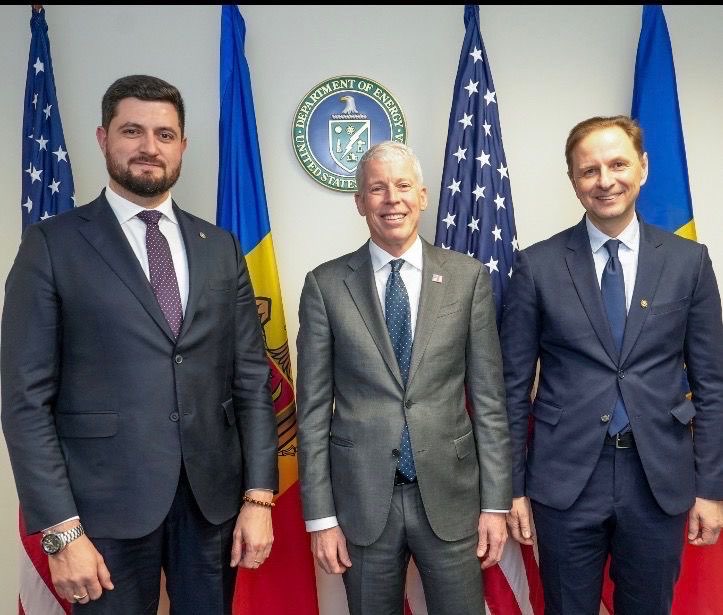
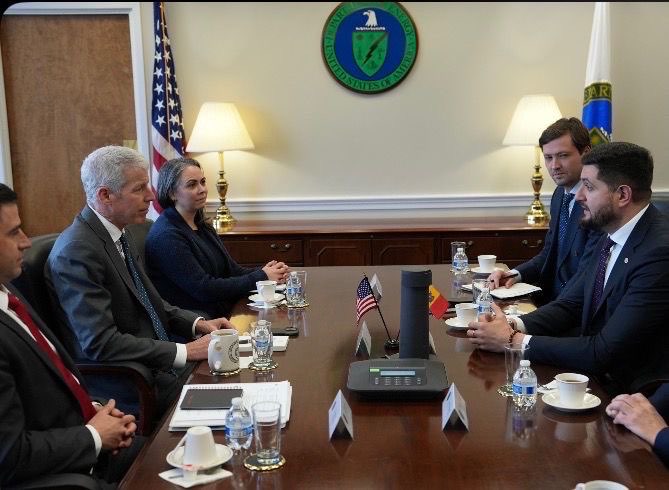
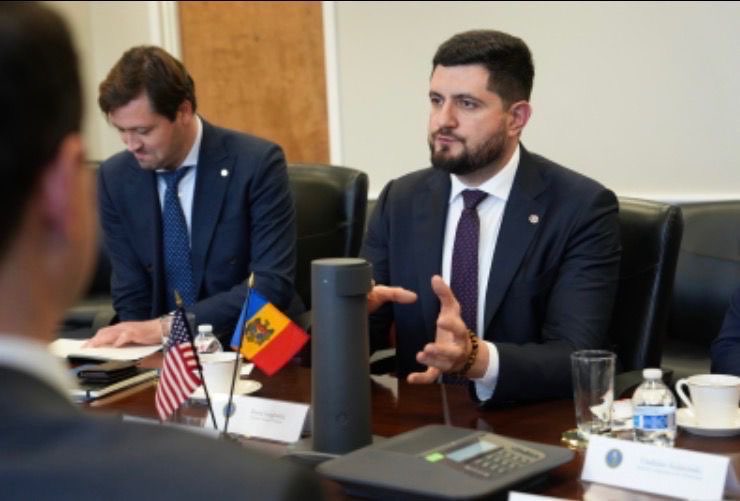
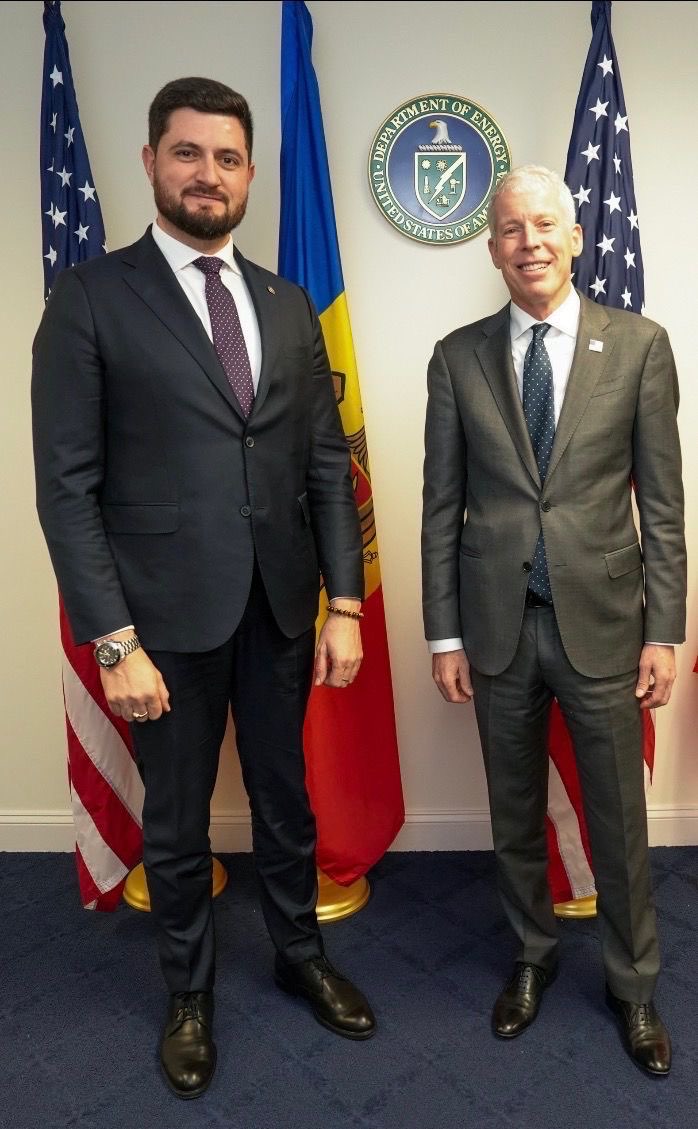
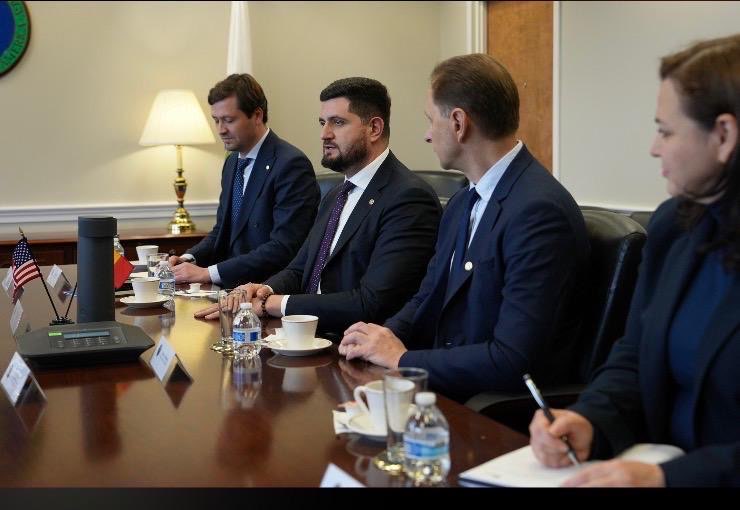
Development of the Vertical Gas Corridor and expansion of the bilateral investment partnership discussed by Minister Junghietu with U.S. Secretary of Energy Chris Wright
- 716 reads




Current progress on the Vertical Gas Corridor project and the additional steps needed to strengthen and ensure its feasibility were among the main topics discussed by Minister of Energy Dorin Junghietu with U.S. Secretary of Energy Chris Wright during a recent working visit to the United States. The parties also discussed several concrete proposals to further develop this initiative, which will help strengthen and enhance regional energy stability and security.
At the same time, discussions focused on the energy security of the Republic of Moldova as part of regional and European security. Minister Junghietu reiterated that for Moldova, energy is not only an economic issue but also a matter of national security, and that the complete elimination of energy dependencies that have made Moldova vulnerable in the past is a strategic objective.
Another topic addressed was the further development of the energy partnership between the Republic of Moldova and the United States, including in the context of the construction of the Strășeni–Gutinaș high-voltage power line, financed by the United States, and how American expertise, technologies, and investments can bring significant benefits to both countries, anchoring the Republic of Moldova in the Euro-Atlantic space.
We recall that in 2024, the Republic of Moldova and Ukraine joined the Vertical Corridor for natural gas transport, which currently includes Greece, Bulgaria, Romania, and Hungary. Launched in 2016, the Vertical Corridor now integrates the Trans-Balkan Pipeline and allows the transport of natural gas from Greece to Moldova and to underground storage facilities in Ukraine. The pipeline can transport both pipeline gas from Azerbaijan and liquefied natural gas (LNG), including from the United States, from the Greek terminals of Revithoussa and Alexandroupoli.
Historically, the Trans-Balkan Pipeline transported Russian gas to the Balkans via Ukraine, Moldova, and Romania, but it became inactive after Russia redirected gas exports in 2020 through the TurkStream 1 and 2 pipelines. A significant portion of the transport capacity along the Trans-Balkan Corridor remains underutilized, despite growing demand for south-to-north gas flows toward Ukraine. To encourage the use of this route, a single transport product was created for the corridor, providing transport tariff discounts of 25% in Greece and Bulgaria, 50% in Romania and Moldova, and 46% in Ukraine, on the condition that the gas is transported through a series of dedicated points directly to underground storage facilities in Ukraine.
Images