The Republic of Moldova participated for the first time in a simulation of vulnerabilities in the event of a potential regional oil product crisis, conducted by the International Energy Agency

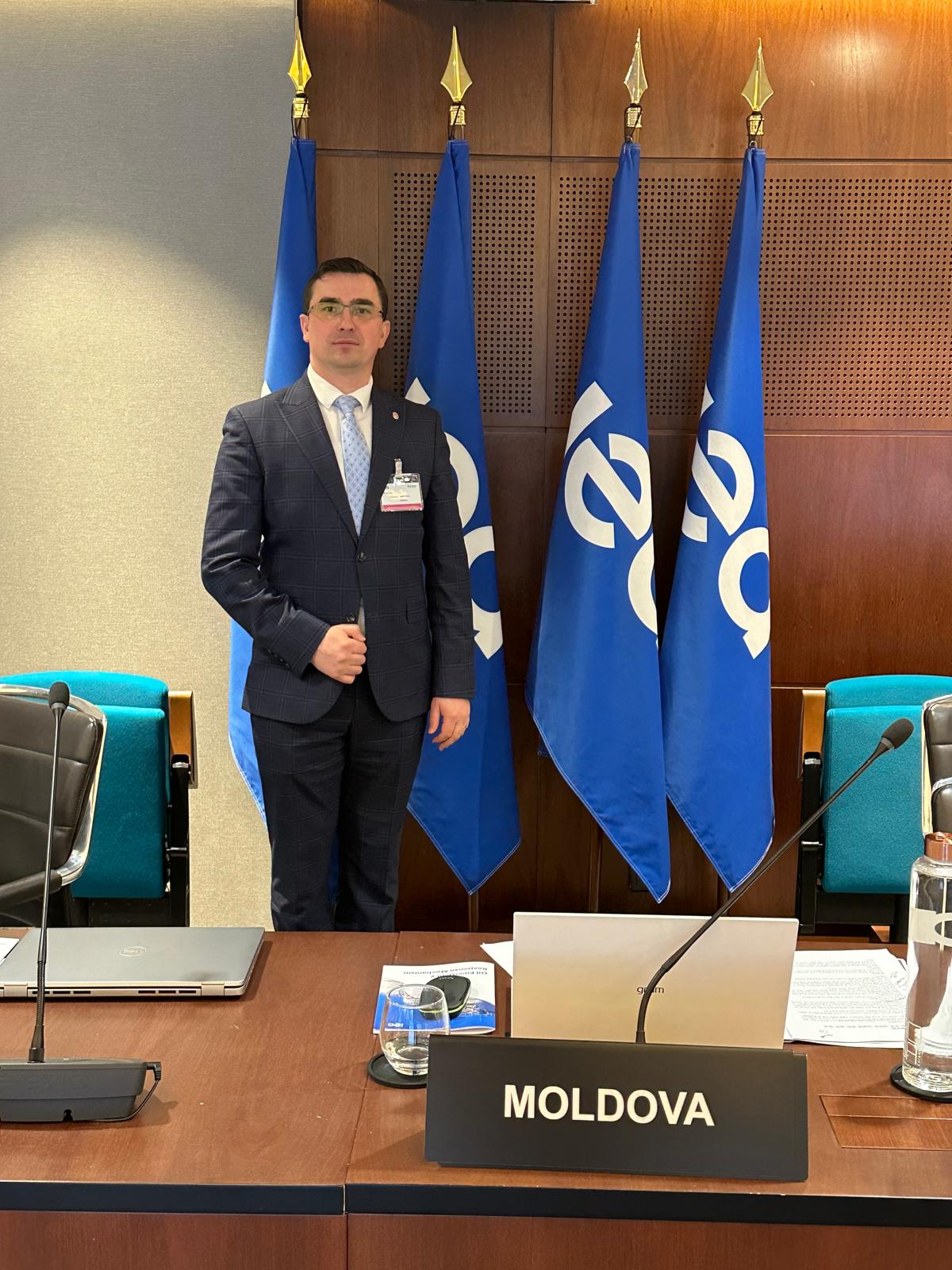
Secretary of State Constantin Borosan participated in the regional oil crisis simulation exercise, organized in Paris by the International Energy Agency (IEA). The exercise aimed to test the resilience of member countries to a potential crisis and the IEA’s intervention mechanisms [1], but also to highlight the potential economic damage of an oil supply disruption, depending on the market context.
The IEA was created specifically as a result of the 1973 oil crisis with the mission of ensuring energy security, including through the collective intervention system that would mitigate the impact of oil product shortages on the global market by increasing supply or reducing demand. Furthermore, each IEA member country is required to hold oil product stocks equivalent to at least 90 days of net oil imports and to be prepared to respond collectively to serious supply disruptions affecting the global oil market.
The Republic of Moldova was invited for the first time to participate in this exercise, even though it is not a member of the International Energy Agency, after the Ministry of Energy signed a memorandum of cooperation with the IEA in March 2024.
Secretary of State Constantin Borosan presented the evolution in the field in the Republic of Moldova, which is entirely dependent on imports, almost the entire quantity of diesel and gasoline is imported through oil companies, which are subsidiaries of refineries in Romania, but also through sea and river ports in Romania.
According to Constantin Borosan, the simulation showed how vulnerable the Republic of Moldova is to a potential disruption of petroleum product supplies, considering that commercial stocks usually provide up to 20 days of domestic consumption. For example, in May 2022, due to logistical challenges related to Russia's invasion of Ukraine, commercial stocks of diesel and gasoline were only sufficient for three days of current consumption.
Petroleum products remain the dominant energy source in the Republic of Moldova, with an annual consumption of 1,130 ktoe. According to the country's Energy Balance, petroleum products hold the largest share of gross final energy consumption or 43%, followed by natural gas with 22%, biofuels and firewood – 21% and electricity – 12%.
In this context, Constantin Borosan presented the draft law for the transposition of the European directive on petroleum product stocks. Thus, Moldova plans to gradually introduce, by 2030, the obligation to store petroleum products that would correspond to a quantity equal to 90 days of average daily net imports. These will be managed according to a hybrid model – 50% of the storage obligation would be allocated to a state institution subordinate to the Ministry of Energy, and 50% to importers. According to the draft law developed by the Ministry of Energy, up to 60% of petroleum product stocks would be stored on the territory of the Republic of Moldova, with the rest possibly being stored in the importing country.
 [2]
[2]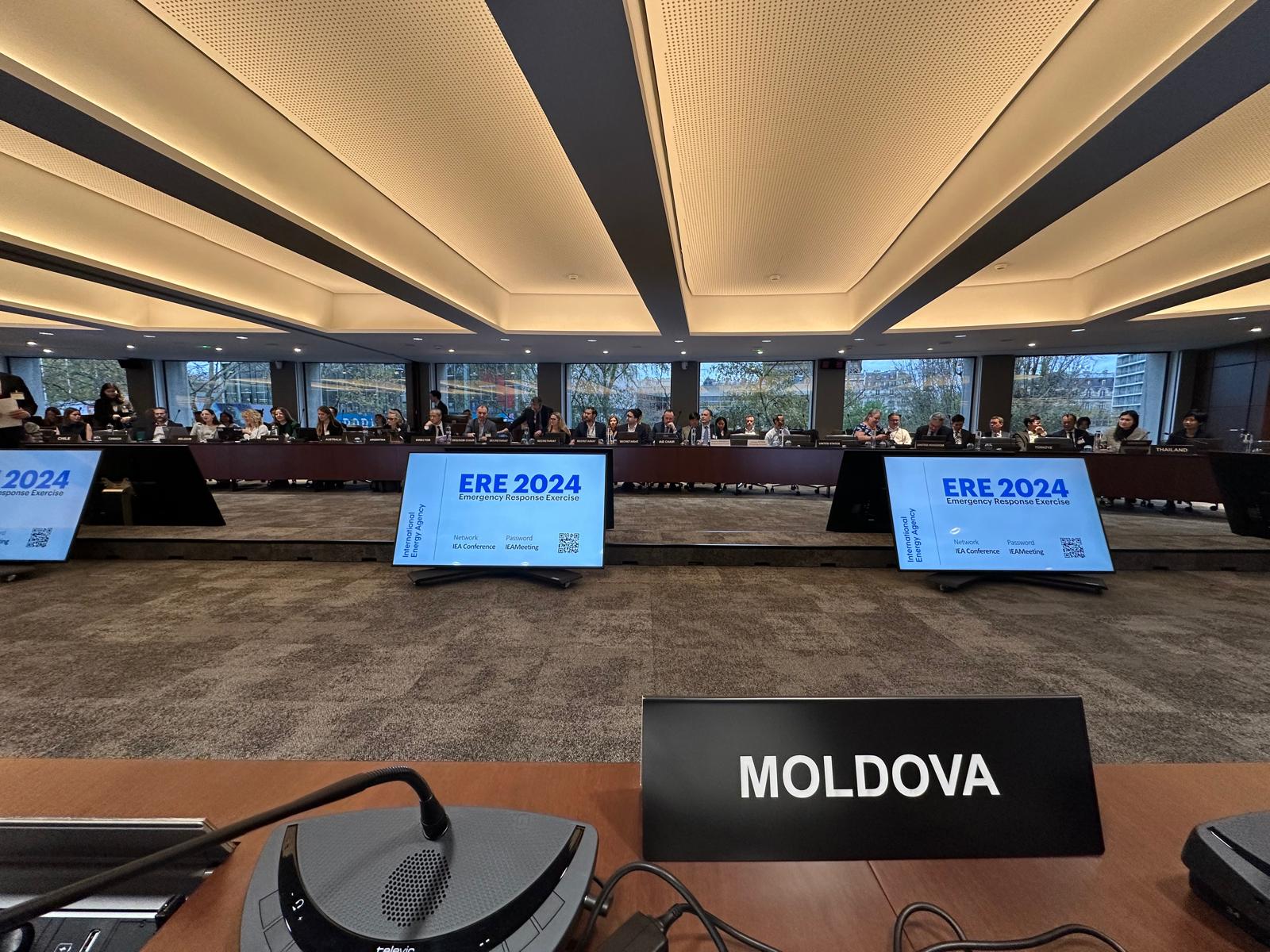 [3]
[3] [4]
[4]