Establishment of a state of emergency in the energy sector

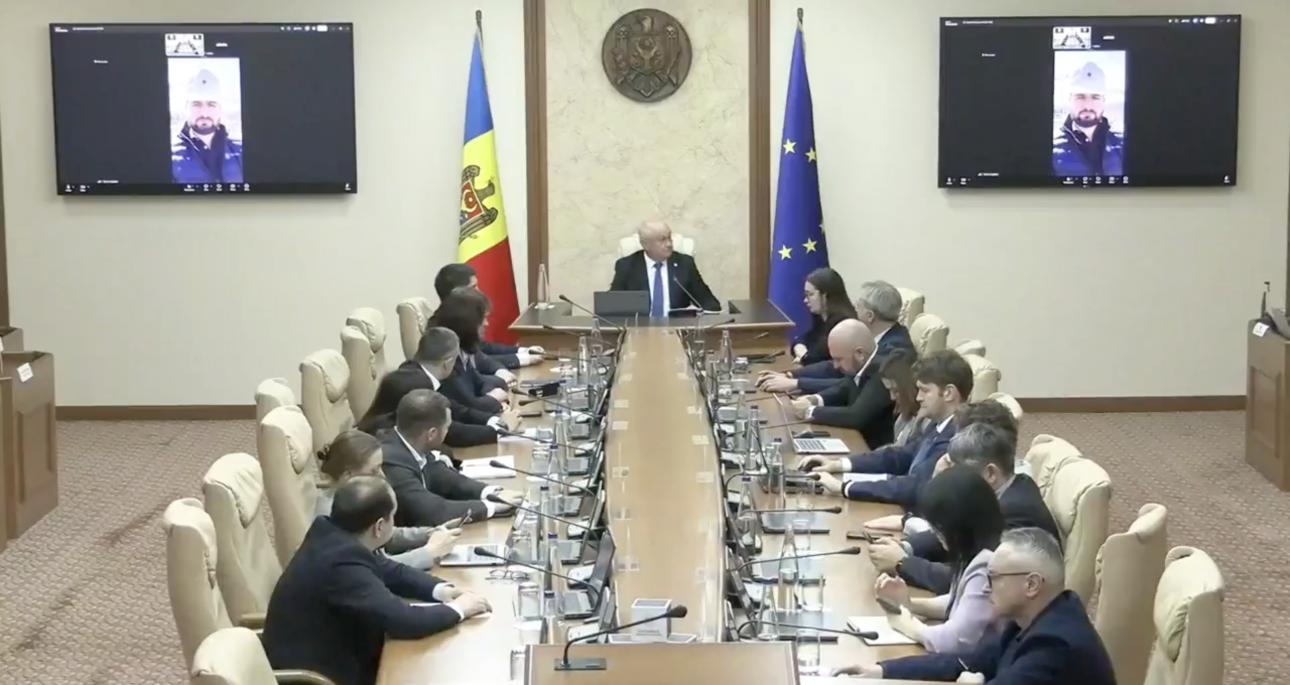
The Cabinet of Ministers has approved the declaration of a state of emergency in the energy sector across the entire territory of the Republic of Moldova for a period of 60 days, starting from March 25, 2026. According to legal procedures, this decision requires adoption and formal establishment by Parliament. Therefore, an extraordinary parliamentary session was convened today.
In accordance with Article 29 of Law No. 248/2025 on crisis management, the measure was proposed based on today’s meeting convened on the platform of the National Crisis Management Centre and at the request of the Ministry of Energy.
In the context of Russian military attacks on infrastructure in southern Ukraine, which led to the outage of the 400 kV Vulcănești–Isaccea overhead power line, the decision is based on risk analysis, the need for urgent interventions to protect critical infrastructure, and the mobilization of additional resources.
Since the incident, which occurred on March 23 at 19:15, the transmission system operator “Moldelectrica” immediately activated safety protocols. Automatic reconnection attempts of the line were carried out, but were unsuccessful. Technical faults identified on Ukrainian territory at conductor support elements indicate a severe short circuit requiring specialized intervention.
The 400 kV Vulcănești–Isaccea line is the main import corridor of the ENTSO-E system—the European network coordinating electricity transmission system operators across Europe. It normally supplies between 60% and 70% of consumption on the right bank of the Republic of Moldova. Currently, flows on this route are at 0 MW, generating an estimated deficit of up to 350–400 MW during peak hours starting tomorrow.
Although the system is currently operating stably through the use of 110 kV lines in island mode and the reconnection of the 330 kV Bălți–Dnestrovsk line, these resources are limited and can cover only a fraction of national demand.
Moreover, the restoration process is hindered by the identification of drone debris near the affected infrastructure on the Ukrainian side, requiring demining operations before technical teams can safely intervene fully.
In this context, declaring a state of emergency is not merely a formality but a legal mechanism that provides the necessary tools to prevent major damage to the system:
- First, it allows for rapid decision-making to ensure energy resources, including derogations from standard procurement rules, in order to guarantee continuity of supply to citizens.
- Second, it provides a framework for the immediate allocation of financial resources needed to purchase energy and emergency equipment.
- Third, it allows the Government, if necessary, to impose consumption rationing and special operating rules for economic operators, in order to protect critical economic facilities and social institutions.
At the same time, this regime facilitates centralized strategic coordination through the National Crisis Management Centre, ensuring constant communication with partners in Romania and Ukraine, as well as accurate public information regarding necessary energy-saving measures.
Meanwhile, technical teams continue continuous monitoring and field inspections. We reiterate that this measure is one of national security protection, aimed at limiting the effects of the crisis and ensuring the functioning of vital services such as healthcare, social services, public order, and others.
 [1]
[1]