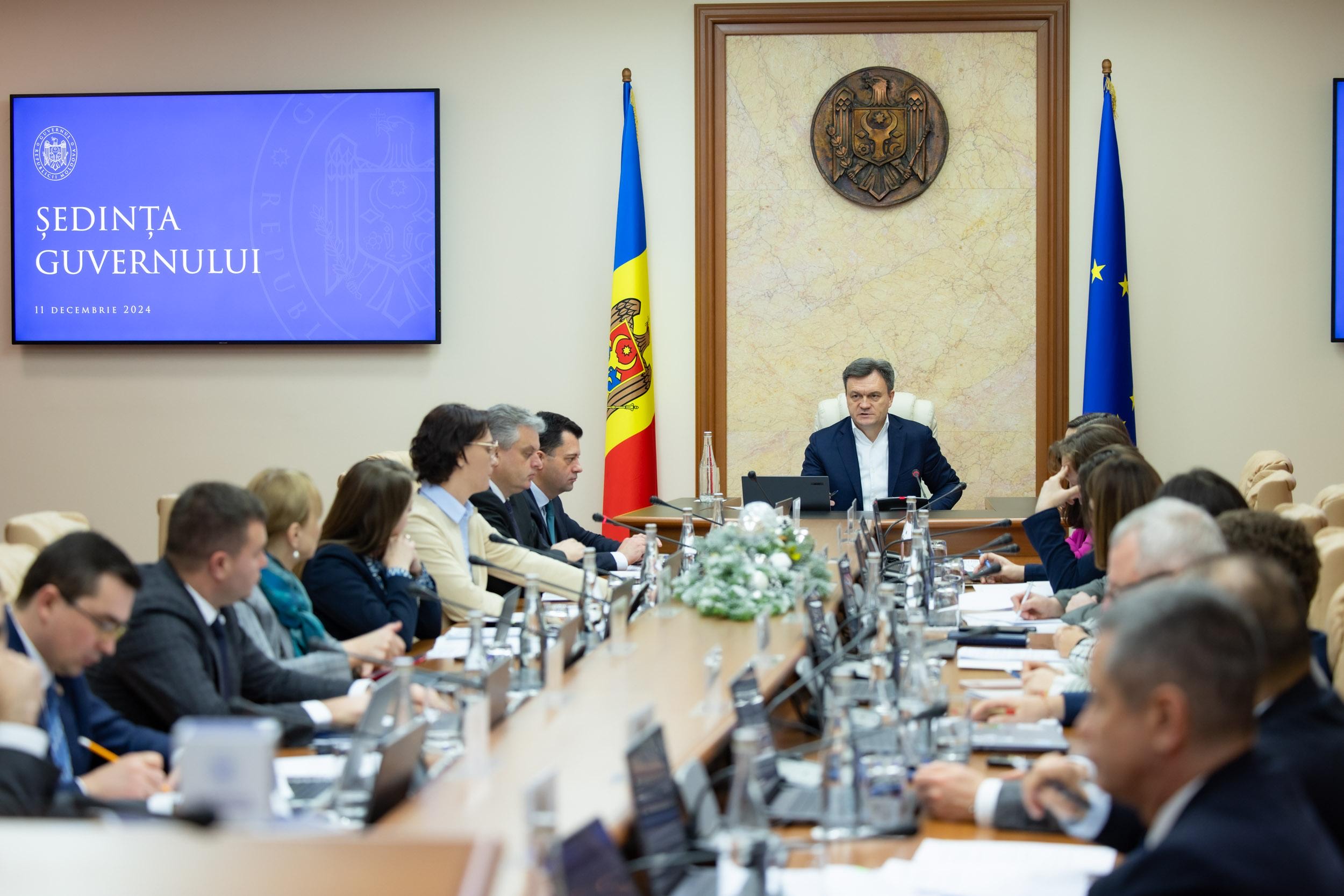
The Government approved the project to establish a state of emergency in the Republic of Moldova for 60 days
11-12-2024 09:37
708
- 708 reads
December 11, 2024, Chisinau - A state of emergency is to be established in the Republic of Moldova for a period of 60 days, starting December 16. The decision was approved today during the Government meeting, at the proposal of the Commission for Exceptional Situations. The document is to be submitted to the Parliament for examination and adoption.
This measure is necessary in the context of major risks to the energy security of the Republic of Moldova and possible humanitarian effects on the left bank of the Dniester, determined by the uncertainty regarding natural gas deliveries by Gazprom to the Transnistrian region, especially in the context of attacks on energy infrastructure in Ukraine.
"There is no transit problem - there are routes for delivering natural gas to the Republic of Moldova and to the left bank of the Dniester. If Gazprom's intention materializes, it will result in a humanitarian crisis that comes from two sources. The first is the lack of energy resources for basic needs in the middle of winter. The second thing is the lack of income for these people to buy their basic goods. This is the context and the problems that the Government of the Republic of Moldova must solve”, mentioned Prime Minister Dorin Recean.
According to the CSE report, at the moment, the electricity import capacity in our country is limited to 315 MW through the interconnection with Romania, insufficient to cover the demand during peak hours. The vulnerability is accentuated by the fact that the Isaccea-Vulcănești interconnection power line crosses the territory of Ukraine, which makes it susceptible to interruptions in the event of new attacks on the energy infrastructure of the neighboring country. At the same time, in the absence of natural gas from Gazprom, the Cuciurgan Thermal Power Plant (MGRES) will not be able to ensure the necessary production of electricity under the same conditions. Thus, even in the conditions in which the electricity deficit created throughout the country will be covered, its price will be significantly affected, especially for the residents of the left bank of the Nistru River.
During the state of emergency, the Commission for Exceptional Situations will be able to adopt urgent measures to allocate financial resources and coordinate the necessary actions to ensure energy resources, but also to overcome its humanitarian consequences.
Images